In short. An image isn’t bilateral because it shows two sides: every body has two. It is when it makes a choice visible — which side starts, which supports, and whether that distribution is reversible or has been fixed once and for all. Hence four regimes, which are also four ways a culture thinks the body.
Before looking at works you need a criterion, otherwise you end up finding bilaterality everywhere — and a grid that explains everything explains nothing.
The criterion
Two arms, two legs, two mirrored halves: symmetry by itself says nothing. Almost all images of bodies show two sides, because bodies have two.
The useful question is different, and it has three steps. Which side starts? That is: is there a side leading the action and one supporting it, and can you tell which. Is the distribution declared? That is: does the image show it or hide it. And finally the question that divides everything: is that distribution reversible, or has it been fixed forever?
Crossing these questions gives four positions. They aren’t styles or periods: they are ways of thinking the body, and they recur in cultures that never met.
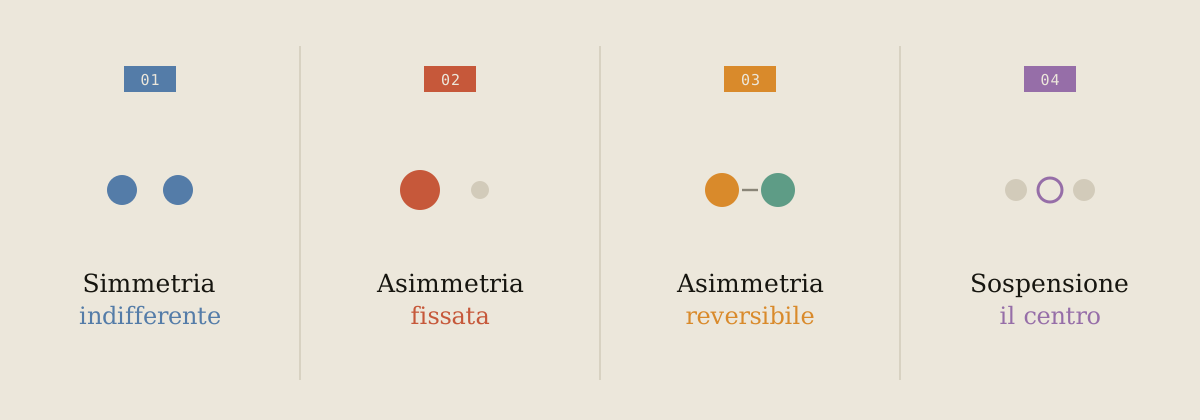
The four regimes
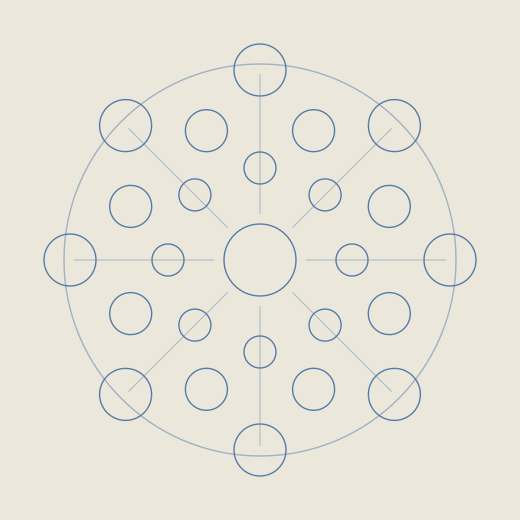
01 · Indifferent symmetry
The two sides are equivalent and no choice is marked. Neither starts, because there is no start: the image doesn’t represent an action but an order. Islamic geometry, the mandala, the frontal heraldic figure.
Here reversibility doesn’t even arise: there is nothing to invert. It’s the regime in which the body isn’t the subject — the structure is.
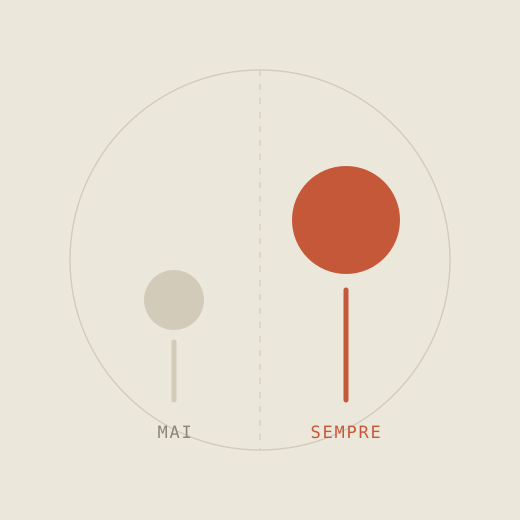
02 · Fixed asymmetry
One side is permanently marked, and almost always moralised: the right that blesses, the right that is right, the left that stays sinister. The Pantocrator, the Egyptian walking figure.
The choice is visible, but already made and irrevocable. It’s the regime that produces laterality as identity: not «this time I start from here», but «this is what I am». And it’s also the most widespread, in images and in bodies.
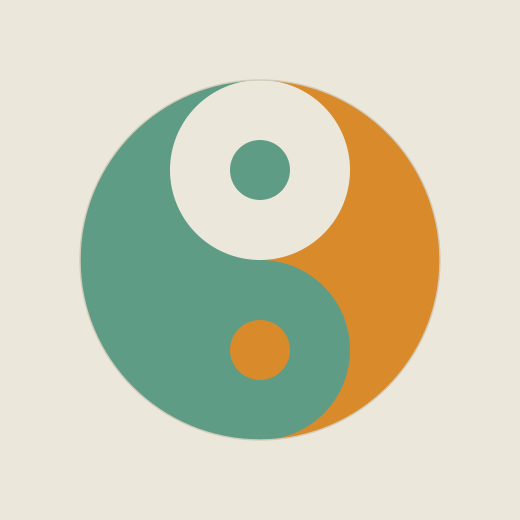
03 · Reversible asymmetry
Roles are distributed, but shown as exchangeable: each pole contains the seed of the other and rotation is inscribed in the form. The taijitu, the eight trigrams arranged around a centre.
It’s the only regime where reversibility needn’t be inferred: it is drawn. And it’s no accident that it’s rare — drawing something that can become its own opposite means giving up representing a definitive state.
04 · Suspension
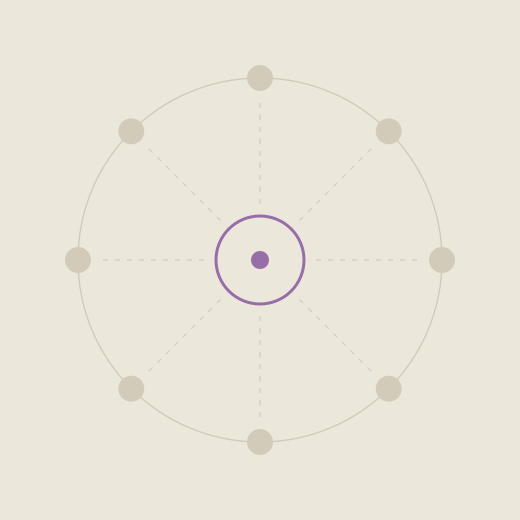
The image catches the instant before assignment: no side leads yet, and precisely for that reason all are available. It isn’t indifferent symmetry — there, there was nothing to choose; here the choice is possible and hasn’t happened yet.
It’s the hardest regime to represent, because an instant has no stable form. And indeed it is almost always found as the centre of something else: the empty point around which the eight arrange themselves.
How to use the grid
It isn’t for cataloguing. It’s for asking three questions in front of an image, in this order: is there a leading side? Can you tell which? And could it be inverted, and still be the same image?
The last one is what really discriminates. Try mirroring a figure mentally: if the image holds, you’re in a reversible regime. If something breaks — the blessing becomes wrong, the sword ends up in the wrong hand — that distribution was fixed, and now you know it.
A case that breaks the grid
A rule is worth as much as the exceptions it admits. The Menkaure statue, 4th dynasty, sits in two regimes at once: below the belt it’s fixed asymmetry — the left foot advanced forever — while above, the symmetry isn’t indifference but suspension, the instant when no side has chosen yet.
The upper half says I can go anywhere, the lower I go nowhere. The grid, taken literally, doesn’t allow for it — and precisely for that reason the exception is the most interesting piece. The full reading →
How it could be taken apart
A grid that reads any image is a useless grid. So the question has to be stated: which image isn’t readable this way?
An honest answer: all images where the body isn’t the subject, and those where laterality depends entirely on technical constraints — the hand holding the tool, the direction of writing, the patron’s position. There the grid records a fact about craft, not about thinking the body.
And if in some culture we found reversibility images systematically accompanied by texts asserting a fixed laterality, the regime I assigned would be wrong. That criterion is what makes this grid a proposal rather than a belief.
The three choices, in the body → · The research, with the documents →